
Landscaping SEO for work people buy with their eyes
Landscaping SEO is seasonal and visual. Demand for each service peaks in a different month, and the photographs decide the enquiry. Publish the page months before the season, and make the images fast.
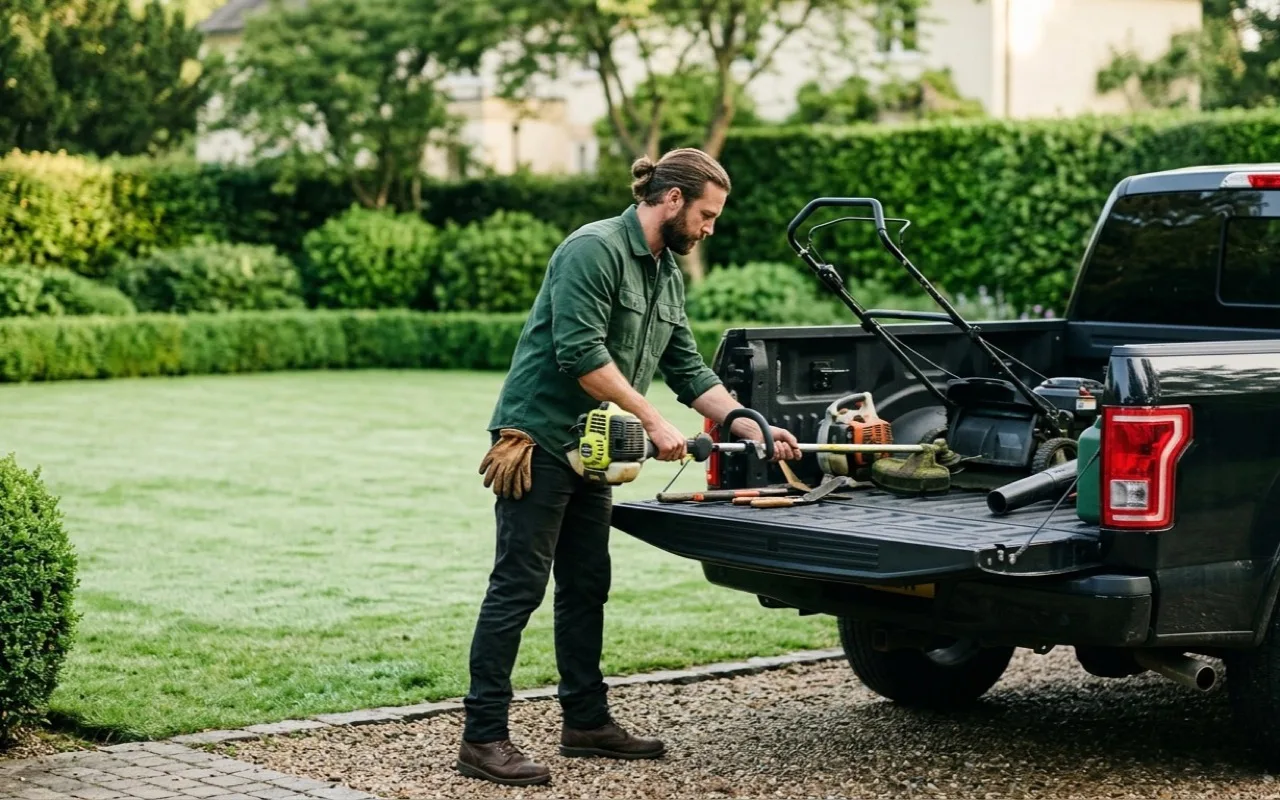
A patio costs more than a boiler repair and takes longer to decide on. Nobody signs on the first visit. They look at nine companies over three weeks, comparing photographs of gardens like theirs.
The season is the other half. Mulch climbs in April, hardscape through summer, leaf cleanup in October, December is snow. A page published the week the season starts has missed it.
So this is a calendar problem as much as a search problem. Most agencies on a content quota get that wrong, because a quota fills the months evenly and demand does not. We would rather write four pages in July than one monthly all year.
Worth saying plainly: building sites has been the day job here since 2018, and search sold monthly is the newer half. There is no landscaping client list here, only developers who resize the image library themselves.
More on this:website design for contractors and trades·how a monthly SEO retainer is scoped·WordPress speed and image optimisation work·sites we have designed and built
What holds these sites back
Galleries that never load
Forty photographs straight off a phone, each four megabytes. On cellular data the page is still painting when they quit.
One page called Services
Patios, retaining walls, irrigation, lighting, lawn treatment and snow share one page. None of them can rank, because the page is about all of them at once.
Content written in the wrong month
The spring cleanup page goes live in March. Google needs weeks to crawl and index it, so it earns real traffic the following year.
A service area drawn to impress
The profile claims fifty towns. The crew drives to eleven. Rankings spread thin across towns you would decline.
What the work covers
A page per service, per season
Each service gets its own URL, its own photographs and its own season. Snow removal and paver patios share nothing except your logo, and a shared page serves neither.
Photographs treated as the product
Before and after pairs, shot at the same angle. Resized to what the layout renders, served as WebP, with width and height set so nothing shifts.
A publishing calendar that runs ahead
Autumn pages get written in July, snow pages in August. You approve the whole year at the start, which is how we stop a quota producing filler.
The service area, honestly drawn
We map where crews actually go, then build pages only for those places. A town page with no job photographs from that town should not exist.
Reporting that compares like with like
Seasonal traffic makes month on month reporting meaningless. We compare this April against last April, inside the sixteen month Search Console window.

In every month
- An image audit listing every oversized file and what the page really serves
- One service or location page a month, written against the seasonal calendar
- Google Business Profile categories, service area and a photo cadence on the same calendar
- Core Web Vitals measured from the Chrome UX Report, not a lab score
- A quarterly call comparing the season against the same season last year
Why the season decides your publishing calendar
How the year is planned
Month one is technical and photographic. We audit the site, measure Largest Contentful Paint against Google's 2.5 second field threshold, and go through the image library to find what is served at full size. On most landscaping sites that alone is the biggest win.
Then we build the calendar backwards. Work out when each service peaks, subtract roughly three months for crawling, indexing and early ranking, and that is the month the page must be live. Snow in August feels absurd and it is the correct order. Last year's page is updated in place and redated rather than replaced, because a URL that has held its position beats a fresh one.
Photography is the part we cannot do for you, and a stock library is no substitute. What we can do is give your crew a shot list: same angle before and after, a wide, a detail, and one with a person in frame for scale. Twenty minutes a job.
Local signals run alongside. Landscaping SEO lives or dies in the map pack for a lot of queries, so the profile, the categories, the service area and the review flow matter as much as the pages. We will tell you when the website is not your constraint.
- The publishing calendar agreed once, for the whole year
- A shot list your crew can follow in twenty minutes
- Fixed monthly hours, thirty days notice
- Year over year reporting, never month over month
The first quarter
- 01
Week one, the images
We list every image over 300 kilobytes, find which ones the gallery links at full size, and fix the worst offenders. This usually shows in field data within a month.
- 02
Week two, the split
The Services page becomes one page per service. Old URLs get 301 redirected, internal links rewritten, and the sitemap regenerated so it stops listing the old one.
- 03
Week three, the calendar
We map your services against the months they sell, then set a publishing date three months ahead of each. You approve it before anything is written.
- 04
Month two onward
A page a month against that calendar, with your photographs and your pricing language. Nothing publishes until the crew confirms the photographs are from jobs you did.
- 05
Every quarter
Impressions and clicks compared against the same quarter last year. If a season came and went without movement, we say why rather than point at a rising line.
What landscaping SEO costs
How many services you really sell
Four services is four pages. Eleven across design, build, maintenance and snow is a much longer calendar and a much longer engagement.
Whether the photographs exist
A tidy library of before and after pairs makes this quick. A camera roll with no job names attached adds weeks.
How wide the service area is
One town needs one set of local pages. Three counties needs a decision about which places earn a page, and that decision is billable thinking.
What the site is built on
A current WordPress install with a normal theme is quick to work in. A drag and drop builder that inlines every image style is slower, and we would say so before quoting.
The image setting that quietly wrecks your gallery
Since WordPress 5.3 any upload wider than 2560 pixels gets a scaled copy, and the file your page serves is the one ending in -scaled.jpg. The full size original stays on the server. Most lightbox plugins link that original, so a visitor tapping a before and after photo pulls down a six megabyte file. Check what your gallery links to before blaming the host.
Sources:the WordPress big_image_size_threshold filter documentation·Google's documentation on images in search
April demand is decided in January, summer hardscape in March, October cleanup in July and snow in August. Whichever of those dates falls next is the page to write now, whatever a content quota says is due this month.
So start with one page rather than a retainer. Pick the service whose season is closest and let us write that single page against your own photographs. You keep it either way, and by the end of that season your own booking sheet will tell you whether a monthly line is worth it.
Get a fixed-price quote Back within 1 business day
Questions landscapers ask
When should a spring page go live?+
Aim three months ahead of the peak, so January for April demand. Google needs time to crawl a new page, index it and work out where it belongs, and that rarely happens in a fortnight. Publishing in March loses the season.
Does landscaping SEO work for a small service area?+
Usually better, not worse. One or two towns means fewer competitors, fewer pages to write and a real shot at the map pack. Wide service areas spread budgets thin, because every extra town needs its own page and its own photographs.
How many photographs does a service page need?+
Between eight and twelve finished jobs, ideally as before and after pairs. Beyond that the page gets slower without getting more persuasive. What matters more is that the gardens look like the ones your buyers own, which rules out most stock photography.
Do I need a page for every town I serve?+
Only for towns where you have done real work and can show it. A town page with no local photographs and no job names is thin content, and a set of them is worse than none. Four strong ones beat twenty templated.
Is the Google profile more important than the website?+
For near me queries the map pack sits above the results, so the profile often matters more. Categories, service area, photograph cadence and reviews drive that. The website still persuades once somebody clicks through, and it ranks for the longer planning searches.